
From the immortal words of Napoleon Hill: “Success requires no explanations. Failure permits no alibis.”
#napoleonhill #thinkandgrowrich #wordsofwisdom
From the immortal words of Napoleon Hill: “Success requires no explanations. Failure permits no alibis.”
#napoleonhill #thinkandgrowrich #wordsofwisdom
 http://www.bethkobliner.com/kids/adult-kid-move-back-home/
The attached link by author Beth Kobliner is packed with sound advice if you are trying to raise young adults who can live independently of you.
I know of one family who turned their daughter’s bedroom into a guest room when she went away to college. Was this a cruel action or was it simply a way to maximize the allocation of space? To a family who has frequent guests, it seems inefficient to hoard an entire unused room while snoring guests toss and turn on the hide-a-bed couch in the middle of the living room!
I know another family who told their young adults that they can come home for six months after they graduate from college. That allows time to take a breather, find a job, and figure out a place to live. Finding a roommate, much like finding a date, is far easier these days with the availability of specialized internet sites.
It helps to have an open dialog about what will be expected at the end of the educational phase so that no one is surprised by your expectations at their 18th birthday party or at their college graduation ceremony. There is nothing wrong with the conversation that goes something like this, “When you have completed your education, it’s time to contribute as an adult. You’ll always be my kid, but I want to make sure that you know how to take care of yourself. If you choose to complete your formal education right after high school, then you are telling me that you are ready to begin your informal education.” If that conversation is had on a regular basis, there is no reason anyone should be surprised when we carry out the next phase of education. There are a number of ways we as parents can facilitate the informal education, but I’ll save that for another day!
There is no right or perfect way to do this. The important part is that there is an exit plan for the young adult living at home and that there are incremental steps in responsibility to make the plan successful.
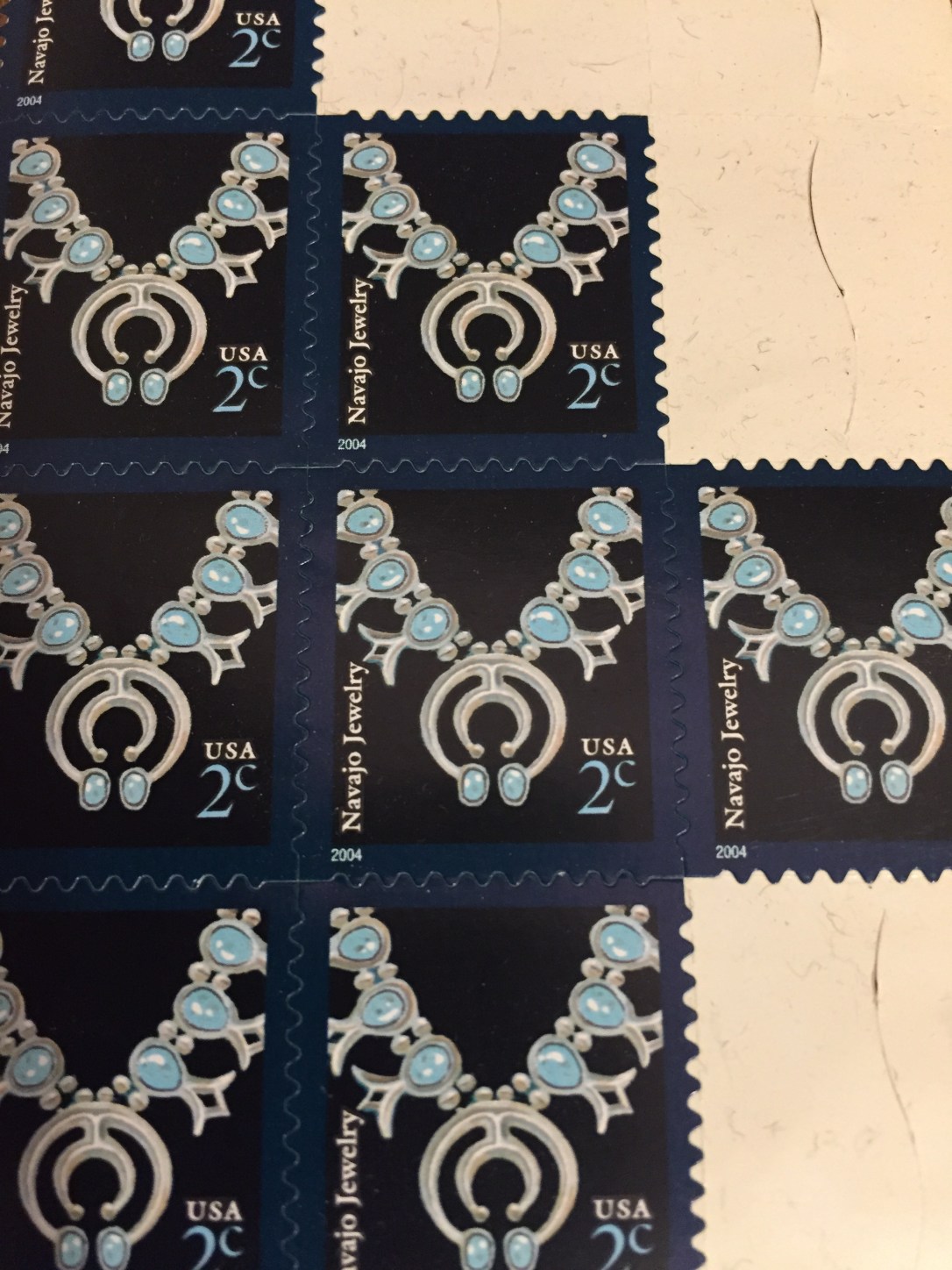 The recent conversation went something like this:
Her: “Mom, should I use THOSE stamps?”
Me: “No, your letter will not get very far with a 2 cent stamp!”
Her: “Then why do you have them?”
And that’s when I ran out of things to say. We all get used to things being a certain way and hardly notice when they change. You probably remember the time before the Forever Stamp came along when stamps had a specific value. For a while, they were rapidly going up a cent or two at a time. I purchased an assortment of one and two cent stamps so I could finish up my entire 100 roll of obsolete postage.
Her question led to a scintillating conversation about the history of stamps (which was pretty much summed up in the preceding paragraph). It made me start to think. Parents and Millennials are living in two different worlds and we have to somehow build a bridge between them. Some of the things I grew up doing, such as mailing a letter, are not as common any more. Regardless, the little necessities are still very important. I know of another young adult who hesitated to mail some very important papers because she had never been to the post office and did not know how to mail a certified letter.
Anyone who has known me since the day of their birth knows that I like words. I have a habit of occasionally using one that I assume they do not know so I can then subtly define it in the next sentence. When asked for a definition to someone else’s obscure word, I would suggest the dictionary. Despite my best efforts, no one but me would pick up a dictionary and hunt for a word. In all honesty, I no longer enjoy it since the printing has shrunk. Since I have been schooled in the wonders of the internet, I now look up all of my words the quick and easy way.
I tried hard to teach my girls to read a map. They couldn’t have been any less interested. I was concerned, on one account, that after first getting her driver’s license that she would never return home…not because she was a runner but because she was directionally impaired. When she started to return home with regularity, I became acquainted with Google Maps. If their phone goes dead on a trip and they don’t have a charger, they’ll wish they had participated in Map Reading 101!
I flip out when I watch someone use a calculator to count Monopoly money! The calculator was an awesome invention, but I sometimes use my actual brain so that I don’t lose my ability to think. I want to make sure that if I ever had to work a cash register again that I would be able to correctly count back the change, no matter what the register told me it should be.
Before you think I’m being cruel in relaying this story, I have been given permission…only because the subject individual looked at me with pity when I admitted that I do not know how to set up a new email address. We need each other. Our Millennials are instrumental in helping some of us with all things technology. They need us to help them experience countless small things that have to be done to navigate life. I had planned to do some decluttering tonight. I think I’ll start with the two cent stamps!
https://www.loveandlogic.com/blog/kids-and-money-face-to-face-with-reality
The linked article by Dr. Charles Fay of Love and Logic rings true for me. Their philosophy had a profound influence on my parenting style, partly because it made sense and partly because it amplified who I already was. When my daughter was 17, she got her first car. I decided to pay up front and then have her reimburse me for her portion. Since I was always looking for an opportunity to teach a relevant financial lesson, I created a promissory note.
| Principal | Rate | Time | PxRxT | Total due | ||||||
| Amount due if loan was from actual bank | $750 | 14% | 0.6667 | $70 | $820 | |||||
| Late fee $25 if payment is not made by the 15th of the month | ||||||||||
| Payment due Date | Amount Due to Bank of Mom | Balance due | ||||||||
| 10/1/2010 | $ 100.00 | $ 650.00 | ||||||||
| 11/1/2010 | $ 100.00 | $ 550.00 | ||||||||
| 12/1/2010 | $ 100.00 | $ 450.00 | ||||||||
| 1/1/2011 | $ 100.00 | $ 350.00 | ||||||||
| 2/1/2011 | $ 100.00 | $ 250.00 | ||||||||
| 3/1/2011 | $ 100.00 | $ 150.00 | ||||||||
| 4/1/2011 | $ 100.00 | $ 50.00 | ||||||||
| 5/1/2011 | $ 50.00 | $ – | ||||||||
| $ 750.00 | ||||||||||
She didn’t like my idea very much. In fact, her response was “You are not the bank, you are my MOM”. Yes, that was true. But I was not just ANY mom. I was the kind that wanted to make sure that she had been provided with a real life education. By setting up a plan that created a penalty for late payments, she chose to pay off her car early rather than risk having to pay any late fees to the money grubbing Bank of Mom! My bank didn’t charge interest, but showing the interest rate that would have been charged by a different bank helped make The Bank of Mom more desirable than its competitors. No late fees were paid to The Bank of Mom and for that I was grateful. I wasn’t looking to augment my income; I was intending to create a self-reliant young adult.
The promissory note contained the components that would be evaluated in a regular bank loan. It wasn’t always convenient to track the payments so meticulously, but I kept it up since I knew it would be good for the wonderful young lady I was trying to mold. I took my job very seriously! Following is the schedule used to record the payments along with additional terms of the loan. The ending message was issued with the loan release to the borrower. Unlike the real bank, the Bank of Mom dispenses a few words of praise and encouragement along with the title.
| Payment History | |||||||
| Due Date | 9/1/2010 | 10/1/2010 | 11/1/2010 | 12/1/2010 | 1/1/2011 | 2/1/2011 | January |
| Date Paid | 1-Nov | 1-Nov | 20-Nov | ||||
| How paid? | Cash | Cash | Cash | Check | Check | Cash | |
| Car loan | $ 100.00 | $ 100.00 | $ 100.00 | $ 100.00 | $ 100.00 | $ 250.00 | |
| Insurance | $ 54.00 | $ 54.00 | $ 54.00 | $ 54.00 | $ 54.00 | $ 54.00 | |
| TV | $ 7.00 | $ 7.00 | $ 7.00 | $ 7.00 | $ 7.00 | $ 7.00 | |
| Cell phone | $ 30.00 | $ 30.00 | $ 30.00 | $ 30.00 | $ 30.00 | $ 69.00 | |
| License Plates | $ 97.00 | $ 50.00 | |||||
| Kelsey Paid | $ 188.00 | $ 191.00 | $ 191.00 | $ 191.00 | $ 191.00 | $ 230.00 | $ 300.00 |
| Borrower will pay on time each month or pay a $25 late fee. Just like a bank loan, she is responsible to repay the loan even if something happens to make the car undriveable or if it isn’t her fault. The payment is due on the 1st of every month. There will be no reminders. There is a grace period of 2 weeks before the payment will be considered past due. | |||||||
| Kelsey-borrower | Borrower signed under protest | ||||||
| Mom-lender | Gleefully signed by Mom | ||||||
| Kelsey paid off her car 3 months early. Congratulations for being a conscientious borrower! | |||||||
| Be proud and always remember how good it feels to earn what you really want. | |||||||
———————————————————————————————————————————-
I couldn’t be more proud of this young lady today. She chooses to forge her own path in life and does not like to be told what to do. Her life is not devoid of struggles, but she accepts responsibility for her actions. Don’t be afraid to swim upstream and do what many parents are afraid to do. If you do it with love, they will be better prepared to face the realities of life. And don’t worry, they’ll still love you!
https://www.loveandlogic.com/blog/kids-and-money-practical-tips-for-financial-responsibility
I wish I had consistently done ALL of the things that are listed in the attached article written by Dr. Charles Fay of Love and Logic. I did give my girls the opportunity to have a clothing budget for at least a year. They were given a fixed amount each month and were told that they needed to project what they might need from month to month. They had to evaluate whether they would need a new winter coat as well as be prepared for any other seasonal clothing needs such as shorts or a bathing suit.
Some benefits were the realization that they were able to stretch their budget if they chose some lightly used clothing. They also figured out that they didn’t always need a new winter coat from one year to the next. It turned out to be pretty useful exercise in budgeting.
Another useful tactic, in lieu of a fixed price budget, is setting a limit on what the parent will contribute to an item. I always did what I could to remove the power struggle. For example, if I offered to pay $50 for a reasonable pair of shoes, the girls could get whatever shoes they wanted if they paid the difference. It’s amazing how resourceful and practical kids can be when they really WANT something AND they shoulder some responsibility for their choices! I did have some restrictions though. I HATE the thought of buying brand new jeans that look like they got into a fight with a starving moth (and the moth won). I know it is fashionable to wear jeans that were “destroyed” prior to purchase. I also know that these jeans are sold at a premium price. I KNOW I sound old, but I DO NOT LIKE THEM!!! I didn’t forbid the purchase or wearing of those jeans; I simply stipulated that MY money wouldn’t be used to buy them!
It’s hard to read articles with good ideas and then focus on all of the things I’ve done wrong. But just for today, I’m going to fixate on the few things I got right!
Click on the link above to read about Essence Evans, a Georgia Mom who expected her five year old daughter to pay rent. I only WISH I would have had the patience to start educating my children as early as this Mom did! I read some of the comments and found that some thought it was a ridiculous exercise. Some people feel that children shouldn’t have to worry about money. Here is why I disagree:
Specifically regarding the issue of “paying rent”, the child was not expected to get a job in a sweatshop to earn her keep. Her mother simply handed her the money to simulate a paycheck, then collected most of it back to resemble the real world. It should not have been traumatic at all. The fact that her Mom let her control nearly 29% of her “income” was more than generous!
Maybe your family doesn’t need to think about money, but plenty of other families do…Every. Single. Day. Have you ever had to:
If your child has never had to worry about any of the above situations, then they are fortunate, indeed. However, it is never too early to begin to teach that almost every decision has an economic impact. Unless you don’t mind the idea of having your offspring dependent on you well into adulthood, you might want to consider teaching with the idea that unless they learn prudent financial lessons when the stakes are low, they might be embarrassed or inconvenienced by some of the experiences listed above after they are no longer under your loving care.
I wonder how many parents are transparent when discussing their finances with their teens and young adults? Although I can see arguments related to both financial transparency and secrecy, I’ve chosen to be open with my daughters about my own personal finances. They know my annual salary, but most importantly, they have had a chance to see the real life costs that help to “absorb” the aforementioned salary. If I only divulged my income but not the expenses, there would be no context to provide meaning and draw accurate conclusions. If I told them that I made “one brazilian dollars” last year, that lone bit of information might give them the impression that we will soon be hanging out with Oprah or Warren! However, a quick analysis of expenditures might show that last year, I spent “one brazilian one thousand dollars”. That additional piece of information dispels the initial illusion of wealth and paints a bleak picture of debt instead!
Here are some ways that you can be transparent and help your teen or young adult learn practical and relevant life skills:
By providing them with the opportunity to preview your personal finances, your young adult will become more proficient in evaluating how to spend their own money and will be more skilled in making real life, relevant decisions.
Happy New Year!
Jump$tart Coalition for Personal Financial Literacy is sharing a Reality Check tool to help show the relationship between expected lifestyle and salary needed to sustain that lifestyle.
This is a good opportunity to start a discussion with your teen or young adult about what type of lifestyle they can expect based on their current career aspirations. Follow the link for more information: Jumpstart’s Reality Check
The Launch Lady
 Having been successfully emancipated at the age of 18, I have lots of real life survival experience. In addition, I have already “launched” one young adult, and the second will graduate from college in the spring. Both have always known that when their formal education has been completed, they are expected to enter their informal, but more relevant, “real life” education after a reasonable and pre-defined period.
Some of you may be thinking how cold I must be to push my offspring out of the nest so abrasively. It is really not as bad as it sounds. I’ve been affectionately referred to as “drill sergeant”. As a 6-year veteran of the US Armed Forces, I HAVE survived boot camp. I can tell you first hand that I don’t really fit that model. The drill sergeant gives 2 options: comply with orders or don’t comply and receive direct and immediate consequences. The Launch Lady does not issue orders quite as militantly. If requests are not met, I will try very hard to make sure that the consequences are logical and relevant. While I am not a dictator, I do hold my offspring to a high level of accountability.
I wish I could claim to be a perfect parent, but that would not be true. I wish I could tell you that I had perfect daughters, and if you asked them, they would probably agree. However, I’m in charge of the content here, so I would have to deny it! They are at, what might possibly be, the perfect age. They’re old enough to manage their own affairs but still come to me for advice. I’m at the stage of parenting where I’ve gone from someone who knows nothing to one who has apparently learned very quickly and can provide intelligence to those who are actually requesting to hear it!
I am NOT trying to tell everyone else that they should have the same opinion as me and that their young adult should move out at the tender age of 18 if they choose not to further their education. I AM trying to bring the message that it is POSSIBLE. I spend much energy trying to anticipate consequences of different situations and what can be done to avoid negative outcomes altogether. I use every opportunity to immerse myself in financial literacy so I can teach valuable skills that will help others to avoid some of the mistakes that I have made. It would give me great satisfaction to gather a community of like-minded individuals to share success stories and ideas about how to help our offspring successfully transition into adulthood while allowing ourselves permission to move into the next phase of our lives.
#parentingmillennials #lifeskills


 Launch Lady Logic